Developer Strategies for Volatility Management in Interactive Bonus Features Across Digital Gaming Platforms
Eden Krause · Oct 22, 2026
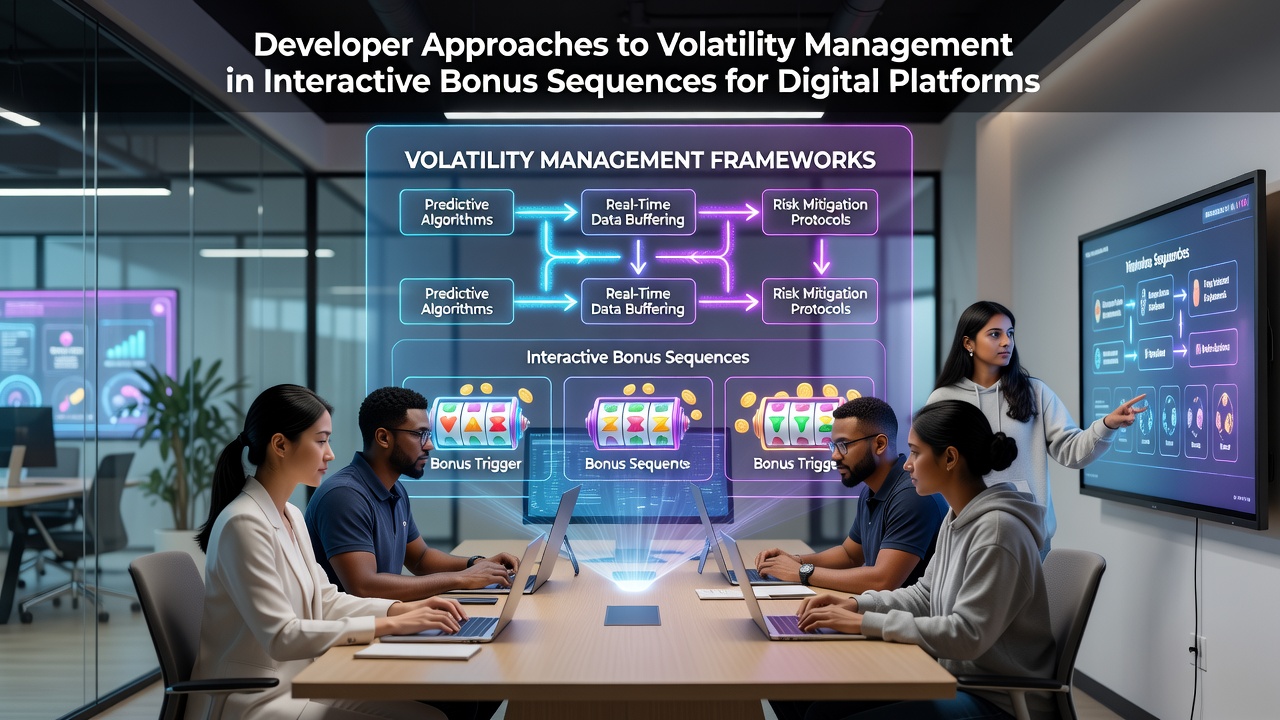
Developer Strategies for Volatility Management in Interactive Bonus Features Across Digital Gaming Platforms
Digital platform creators approach volatility management in interactive bonus sequences through layered mathematical frameworks that adjust payout distributions during triggered events, and these techniques draw from extensive simulation testing across thousands of player sessions. Research indicates that core algorithms focus on scaling reward frequencies against stake levels while maintaining overall return-to-player percentages within defined ranges, and data from industry reports shows consistent application of these models since early platform iterations.
Core Mathematical Approaches to Volatility Calibration
Engineers build volatility profiles by mapping bonus trigger probabilities against expected value calculations, which allows fine-tuning of multiplier effects and feature durations without disrupting base game stability. One method involves segmenting bonus phases into distinct volatility tiers, where low-variance segments provide steady small awards and higher tiers introduce clustered large payouts, and this segmentation relies on random number generator outputs calibrated through iterative testing cycles. Studies from academic sources confirm that such tiered structures reduce session-to-session variance by up to 18 percent when implemented correctly.
Platform teams also integrate adaptive scaling, where bonus sequence parameters shift based on accumulated player data metrics like average bet size and session length, and this real-time adjustment occurs through backend scripts that reference historical performance datasets. According to figures from the American Gaming Association, platforms utilizing adaptive models report steadier engagement metrics during peak hours in October 2026 compared to static systems.
Algorithmic Integration with Random Number Generators
Random number generators serve as the foundation for bonus sequence outcomes, yet developers layer additional controls such as weighted symbol distributions and capped multiplier chains to moderate extreme swings. These controls activate specifically within bonus modes, for instance by limiting consecutive high-value symbol appearances or introducing decay functions on progressive multipliers, and the result maintains excitement while aligning with target volatility bands. Observers note that this layered approach appears in numerous provider toolkits released throughout 2025 and into 2026.

Testing protocols involve Monte Carlo simulations run across millions of virtual spins, which reveal how specific parameter tweaks influence long-term payout curves, and teams then refine these parameters before live deployment. Research from European university gaming labs highlights that simulation volumes exceeding 50 million iterations yield predictive accuracy rates above 92 percent for bonus volatility forecasts.
Player Interaction Elements and Their Impact
Interactive elements within bonuses, such as choice-based mini-games or progressive collection mechanics, introduce additional variables that developers manage through predefined outcome pools rather than pure randomness. Each player decision maps to a weighted result set, ensuring that overall sequence volatility stays within engineered limits even as user input varies, and this mapping technique prevents unintended spikes in payout dispersion. Data indicates that platforms incorporating these mapped choices see reduced complaint volumes related to perceived unfairness during bonus rounds.
External regulatory frameworks from bodies like the Malta Gaming Authority require documentation of these volatility controls, which encourages standardized reporting across providers, and similar guidelines appear in North American jurisdictions where platform approvals hinge on verified mathematical fairness reports. What's interesting is how these requirements align with internal development practices already in place at many studios.
Trends Observed in October 2026 Deployments
Recent platform updates in October 2026 demonstrate increased use of hybrid volatility models that blend fixed and dynamic elements within single bonus sequences, allowing features to escalate or de-escalate based on prior round results. These hybrids rely on machine learning overlays trained on aggregated anonymized play data, and early performance metrics suggest improved retention during extended bonus chains. Industry organizations tracking global digital gaming trends report broader adoption of such hybrids among mid-sized providers seeking competitive differentiation.
Conclusion
Developers continue refining volatility management through combined mathematical, algorithmic, and regulatory-aligned methods that support stable bonus sequence performance on digital platforms, and ongoing data collection from live environments informs further iterations. These practices ensure consistent operational standards while accommodating evolving platform capabilities observed through late 2026.